 John Lennon Memorials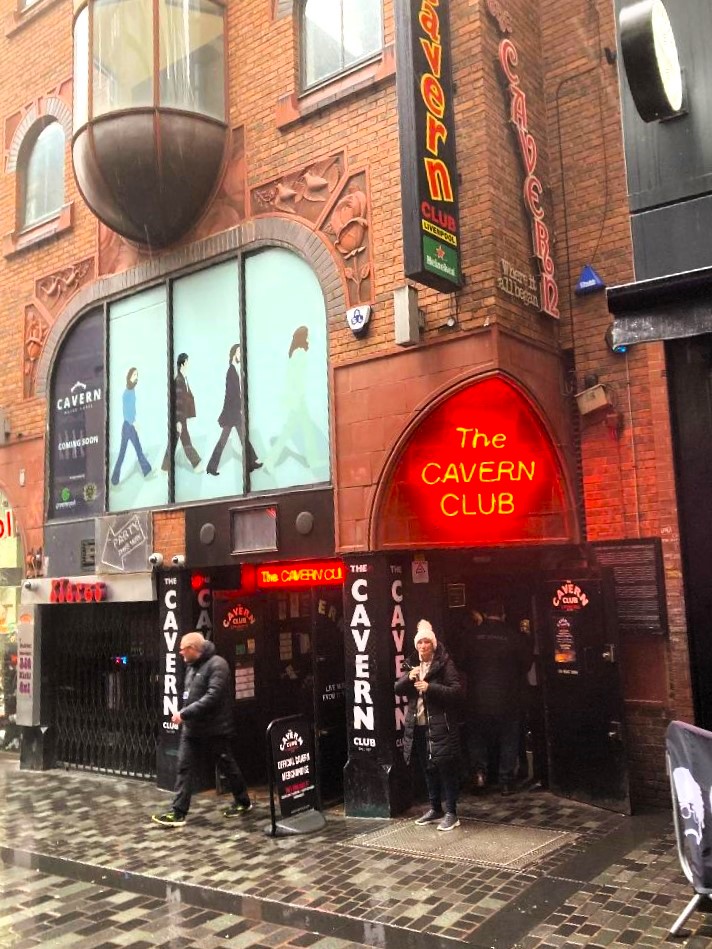
The Cavern Club, Mathew Street, Liverpool
Liverpool, United Kingdom, 1957
The Cavern Club at 10 Mathew Street, Liverpool, opened by Alan Sytner on 16 January 1957, is where the Beatles played from 1961 to 1963; the original cellar was filled in in 1973 and the rebuilt club opened on 26 April 1984.
The Cavern Club is a music venue at 10 Mathew Street, Liverpool. Alan Sytner opened it as a jazz cellar on 16 January 1957, and the Beatles played there several hundred times between 1961 and 1963. The original was closed and filled in in 1973. The present club, rebuilt on most of the old site, opened on 26 April 1984.
A jazz cellar under a fruit warehouse
Alan Sytner wanted a Liverpool version of Le Caveau de la Huchette, a jazz cellar in Paris. He found one under a fruit warehouse on Mathew Street and opened the Cavern on 16 January 1957, with the Merseysippi Jazz Band on stage. Rock and roll was not welcome. When the Quarrymen played on 7 August 1957 and John Lennon led them into an Elvis Presley song, Sytner passed him a note telling him to cut it out. Paul McCartney first appeared there with the Quarrymen on 24 January 1958.
Sytner sold the club to Ray McFall in 1959. Beat groups got regular nights from 1960, and by early 1961 Bob Wooler was running the lunchtime sessions as compere.
The Beatles' Cavern years, 1961 to 1963
The Beatles came back from Hamburg and played their first Cavern show at a lunchtime session in February 1961. Most sources, the club included, date it to 9 February; Bill Harry's Beatles encyclopedia gives 21 February.
The best-known figure for their total is 292 appearances, which is Wooler's count. Barry Miles's Beatles Diary puts it at 275. Either way, the Cavern is where Brian Epstein first saw them, on 9 November 1961, before he took over their management. Granada Television filmed them there on 22 August 1962. Their last Cavern show was on 3 August 1963.
Closed, reopened, then buried
The club shut in February 1966 and reopened on 23 July that year, with Prime Minister Harold Wilson and local MP Bessie Braddock there. The final closure came on 28 May 1973. British Rail had bought the warehouse block by compulsory purchase to build a ventilation shaft for the new Merseyrail loop. Demolition began on 5 June 1973. The cellar was not dug out; it was filled with rubble from the buildings above. The shaft was never built, and the site became a car park.
Is today's Cavern the original?
Not exactly. In December 1981 a redevelopment of the old warehouse site was announced, with a plan to dig out the cellar. In June 1982 the architect, David Backhouse, said that couldn't be done: the arches had been too badly damaged in the demolition.
What was built instead reuses the ground and the bricks. Some 5,000 bricks from the old arches were sold at £5 each, with the money going to the Strawberry Field children's home, and about 15,000 more went into the new club. The rebuilt Cavern opened on 26 April 1984 inside the Cavern Walks development. It sits at 90 degrees to the original and covers about 70% of the old footprint, with the stage close to where it used to be. The Live Lounge at the back was built as a replica of the original arches from old bricks. On the street, the fire exit beside the Cilla Black statue is where the original entrance was.
Former Liverpool FC player Tommy Smith ran the new club until it lost its licence in December 1989. Cavern City Tours, the company of Bill Heckle and Dave Jones, reopened it on 11 July 1991. Paul McCartney played it again on 14 December 1999 and in 2018.
Visiting
The club opens daily from 11am with admission paid on the door, according to its own site, and there are two stages: the front stage and the Live Lounge. Children under 12 can go in with families during the day. There are 33 steps down from the street. Visitors who can't use them can take a lift with a member of staff, and the club asks anyone needing help to phone ahead.
The statues across the street
Searches for "the statue outside the Cavern Club" usually mean David Webster's bronze John Lennon on Mathew Street. He leans on the Cavern Wall of Fame outside the Cavern Pub, and both were unveiled on 16 January 1997, the club's 40th anniversary. OpenStreetMap puts him about 20 m from the club.
About 25 m away, high on the wall of Eric's, is Arthur Dooley's 1974 sculpture Four Lads Who Shook the World, which went up while the Cavern site was empty. Tommy Steele's Eleanor Rigby sits around the corner on Stanley Street, about 120 m away.
Common misconceptions
-
ClaimToday's Cavern Club is the original cellar where the Beatles played.
RecordThe original closed on 28 May 1973 and was filled with rubble when the warehouses above were demolished. The club that opened on 26 April 1984 was rebuilt on about 70% of the old footprint, turned 90 degrees, with around 15,000 original bricks reused.
Why the mix-upIt has the same name, the same street and almost the same site, and the Live Lounge was built as a replica of the old arches.
-
ClaimThe Beatles played the Cavern exactly 292 times.
Record292 is Bob Wooler's count and the one most often quoted. Barry Miles's Beatles Diary gives 275.
Why the mix-upWooler was the Cavern's compere, so his figure became the standard one and is repeated without the alternative count.
Getting there
Moorfields (Merseyrail) is the nearest station to the Cavern Quarter, per Visit Liverpool.
Nearby
Sources
- Cavern Club. Cavern Club Liverpool Opening Times & Prices. Accessed 13 September 2026.
- Visit Liverpool. Liverpool's Cavern Quarter. Accessed 13 September 2026.
- Cavern Club. Disabled Access. Accessed 13 September 2026.
- Wikipedia. The Cavern Club. Accessed 13 September 2026.
- Wikipedia. The Beatles at the Cavern Club. Accessed 13 September 2026.
- The Beatles Bible. 9 February 1961: The Beatles' first Cavern Club show. Accessed 13 September 2026.
- Liverpool Confidential. The true stories behind Liverpool's statues: Part 2. Accessed 13 September 2026.
- OpenStreetMap. Cavern Club, Mathew Street, Liverpool. Accessed 13 September 2026.
Last verified against sources on . Found an error? Send a correction.