 John Lennon Memorials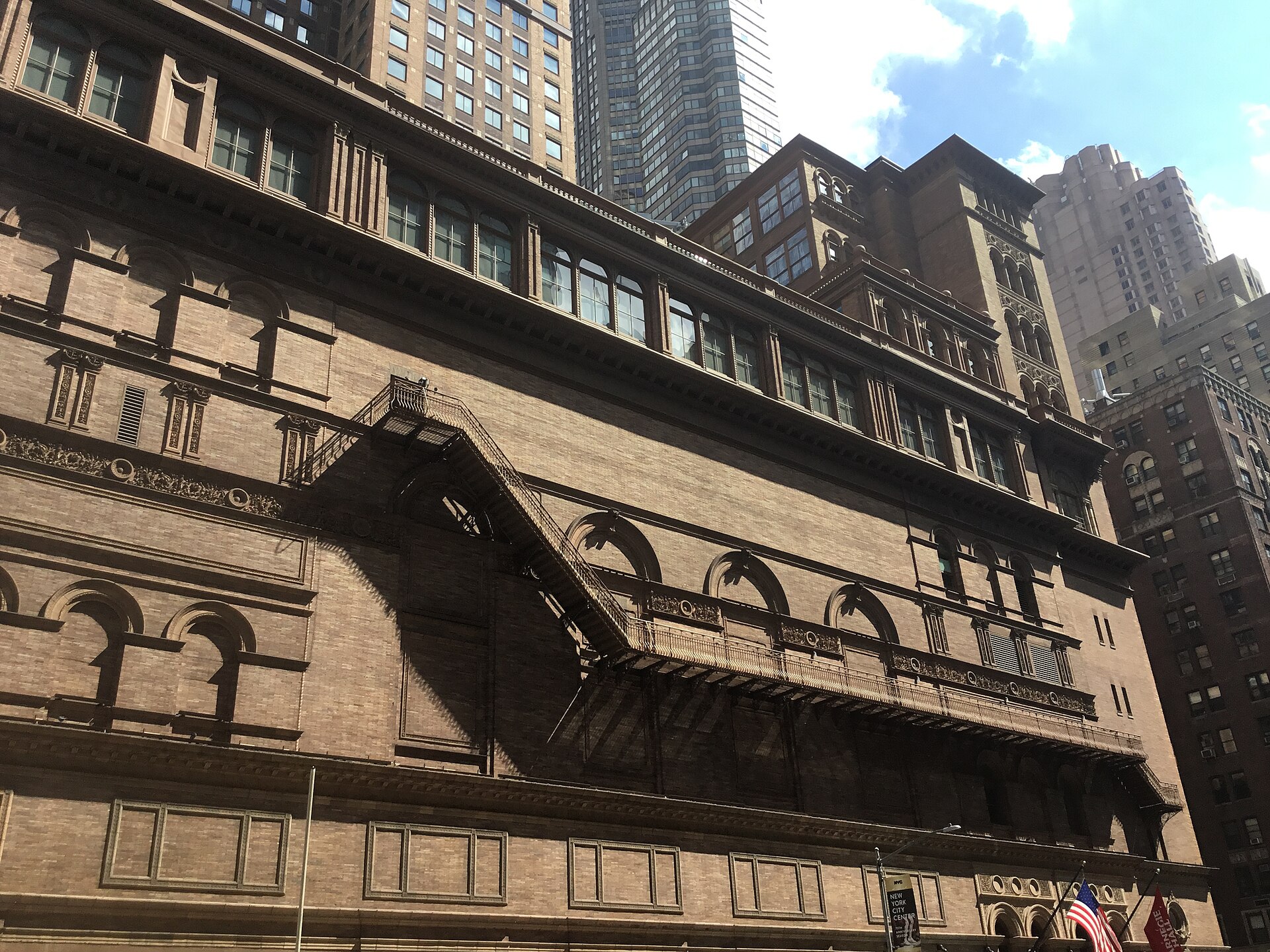
The Beatles at Carnegie Hall, 12 February 1964
Carnegie Hall at 881 Seventh Avenue in Manhattan is where the Beatles, booked by promoter Sid Bernstein, played two sold-out shows on 12 February 1964, the first rock concerts at the hall.
The Beatles played Carnegie Hall, at Seventh Avenue and West 57th Street in Manhattan, on 12 February 1964. Sid Bernstein promoted the two sold-out shows, the first rock concerts in the hall, three days after the band's Ed Sullivan Show debut. Carnegie Hall still presents concerts, but it has no Beatles plaque or marker.
How a rock band got into Carnegie Hall
Sid Bernstein, a New York promoter, had never heard the Beatles play when he reserved the hall. He had read about them in British newspapers and contacted Brian Epstein in early 1963. He told Carnegie Hall management the booking would help international understanding and did not explain what sort of music was coming. No rock group had played there before.
By the date of the concerts the timing had turned in his favor. The Ed Sullivan Show broadcast of 9 February had made the band famous across the country, and both shows sold out.
The day of the concerts
The Beatles came up from Washington, where they had played the Washington Coliseum the night before, by train into Penn Station. After a stop at the Plaza Hotel they got into the hall through back elevators and kitchen exits to avoid the crowds.
The first show was billed for 7:00 pm and started around 7:45. The second, billed for 9:30, did not start until about 11:15. The Briarwood Singers, a folk group, opened. Each Beatles set was short, roughly 25 minutes. To meet demand, extra chairs were put on the stage around the band, bringing each audience to about 2,900. One concert log gives the split as about 2,870 regular seats plus around 150 on stage.
Lennon did not remember it fondly. He later said the acoustics had been terrible.
The live album that was never made
George Martin wanted to record both shows for a live LP. Capitol Records had cleared it with the hall and paid a $600 fee. The American Federation of Musicians stopped it: Martin was not a member of the American union, and it refused to make an exception even when Capitol offered to cover his dues. Epstein would not let anyone else produce, so the recording was dropped. Capitol did tape the band later, at the Hollywood Bowl in August 1964.
Bernstein kept working with the band. In 1965 he promoted their concert at Shea Stadium.
Is there anything Beatles-related at the hall now?
No. Carnegie Hall, opened in 1891 and a National Historic Landmark since 1962, has no plaque or permanent display about the 1964 concerts. The hall did show The Beatles: Hidden Gallery, a set of backstage photographs from the two shows, from 8 October to 17 December 2011, but that exhibition was temporary.
The building is at the corner of Seventh Avenue and West 57th Street, above the 57th Street-Seventh Avenue subway station on the N, Q, R and W lines. The Ed Sullivan Theater on Broadway is where the band made its live American television debut three days before these concerts.
Getting there
57th Street-Seventh Avenue subway station (N, Q, R, W trains), at the hall's corner.
Nearby
Sources
- Carnegie Hall. The Beatles Hidden Gallery Exhibition Comes to Carnegie Hall. Accessed 15 September 2026.
- Wikipedia. Carnegie Hall. Accessed 15 September 2026.
- Kenneth Womack. Everything Fab Four: The Beatles Play Carnegie Hall!. Accessed 15 September 2026.
- The Paul McCartney Project. The Beatles concert at Carnegie Hall in New York City on Feb 12, 1964. Accessed 15 September 2026.
- Wikipedia. Sid Bernstein (impresario). Accessed 15 September 2026.
- Variety. Sid Bernstein Dead: Beatles Promoter was 95. Accessed 15 September 2026.
Last verified against sources on . Found an error? Send a correction.